Servicing South East Queensland
Ridge and Barge Capping Repairs
Servicing Brisbane, South East Queensland & Sunshine Coast
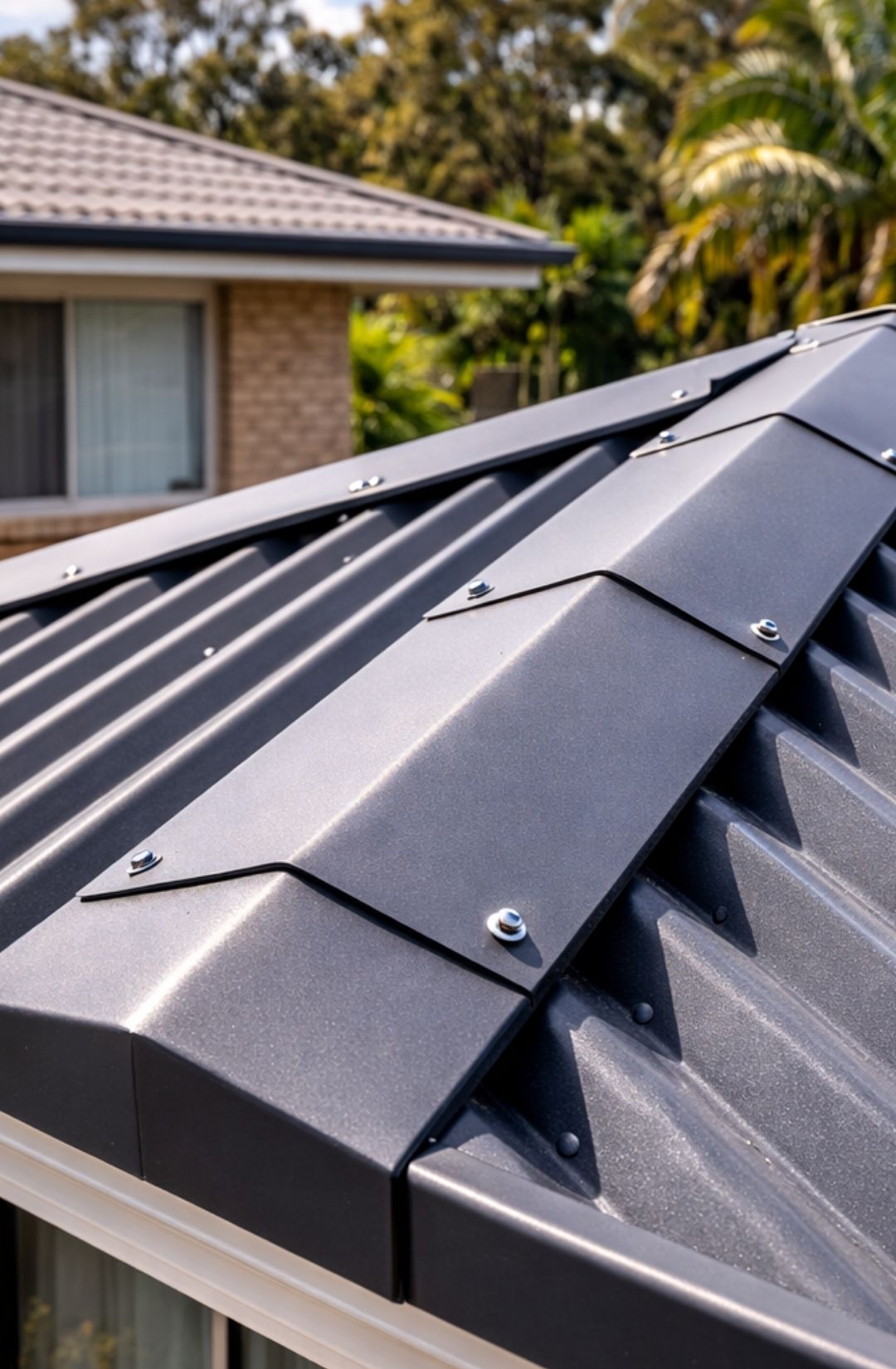
Locate the entry point. Secure or replace the capping. Stop wind-driven rain getting under your roof edges.
Ridge capping repairs Brisbane is one of the most searched roof repair terms in SEQ, and for straightforward reasons. Ridge and barge cappings are the components that finish the exposed edges and apex junctions of a metal roof. They work with the sheeting and flashing system to prevent wind and water from getting under the roof at its most vulnerable points: the apex where two roof planes meet, and the edges where the sheeting terminates at the gable end.
When capping fails, whether through loose fixings, dried sealant, wind uplift, or corrosion, it creates an opening at precisely the location the roof is most exposed to wind-driven rain. The result is water entry that is often mistaken for a general roof leak when the actual failure point is at the capping or the junction immediately beneath it.
What every job includes:
QBCC-licensed tradespeople on the tools throughout
On-roof inspection with photos to identify the actual failure point before any work begins
Written scope and quote covering the correct repair or replacement method
Compatible materials specified for the roof substrate and exposure level
Workmanship guarantee on completed repairs and replacements
Tidy site and clean handover




What Are Ridge Cappings and Barge Cappings and Why Do They Cause Leaks?
On a metal roof, cappings are formed sheet metal components that cover and seal the exposed edges and apex junctions of the roof surface. They are part of the complete flashing and capping system that directs water away from vulnerable junctions and back into the roof drainage path toward gutters and downpipes.
Ridge Capping
Ridge capping runs along the apex of a pitched roof, covering the junction where the uppermost sheets of each roof plane terminate. On a simple gable roof there is one ridge. On a hip roof there is a central ridge and multiple hip lines that also require capping. Ridge capping is fixed through the sheeting below into the batten structure, bedded and sealed on both sides, and designed to prevent water and wind entry at the highest and most exposed point of the roof. When ridge capping is correctly installed, water runs off both sides of the capping and onto the roof planes below. When it fails, the gap beneath it becomes a direct entry path for wind-driven rain.
hip Capping
Hip capping covers the external angle where two roof planes meet at a hip. It runs from the ridge down to the gutter line and performs the same function as ridge capping at that junction: preventing water and wind entry where the sheeting on two different roof planes meets at an external angle. Hip cappings are exposed to wind from multiple directions and are a common failure point on properties in exposed locations.
barge Capping
Barge capping, sometimes called barge flashing or gable flashing, is a formed sheet metal profile installed along the rake or barge edge of a roof at gable ends. It waterproofs the junction between the edge of the roof sheeting and the fascia or barge board below. Barge capping is the component that prevents wind-driven rain from being pushed under the sheeting at the roof edge. When it lifts, separates from the sheeting, or corrodes, the edge of the roof is exposed to water entry that can track across the underside of the sheeting and appear as internal water damage well away from the gable end itself.
book a free roof inspection
Call or book an inspection online.
why
Common Causes of Failed Capping on Metal Roofs
Capping failures follow predictable patterns. Understanding the cause is what determines whether a reseal will hold or whether replacement is the right call:
Wind Uplift and Thermal Expansion Loosening Fixings
Cappings are fixed to the roof structure through the sheeting below. In Queensland's climate, daily thermal cycling causes the capping and the sheeting beneath it to expand and contract. Over years, this movement works fixings loose in the same way that screw washers fatigue under repeated heat cycling. Once fixings have backed out fractionally, the capping can lift under wind uplift loads it would otherwise resist. This is the most common mechanical cause of ridge and hip capping failure on older metal roofs across SEQ.Inadequate Lap Detailing at Capping Joins
Where two capping lengths meet end-to-end, the overlap at the join must be sufficient to prevent wind-driven rain entry at that point. Where laps are too short, where the upwind length does not properly overlap the downwind length, or where sealant has been used as the primary seal at a join rather than as a secondary measure over a correctly detailed overlap, the join becomes a reliable leak source in wind-driven rain conditions.Corrosion at Fixings, Laps, and Cut Edges
The cut ends of capping lengths and the fixing points are the most vulnerable to corrosion because the protective coating is thinner or absent at those locations. In coastal Sunshine Coast environments and coastal Brisbane suburbs, salt air accelerates this corrosion significantly. Surface rust at capping edges and around screws is an early sign of coating failure at those points. Left unaddressed, surface corrosion progresses to through-corrosion that compromises the structural integrity of the capping itself.Deteriorated or Incorrect Sealants
Where sealant is used at capping termination points or at joins, it is a secondary seal over correctly formed metalwork, not the primary waterproofing method. Sealants degrade under UV exposure and heat cycling. When the sealant at a capping termination fails, it exposes the edge of the capping to direct water contact. Where sealant was used as the primary waterproofing method at a join rather than as a secondary measure, its failure leaves nothing behind it.Incompatible Materials
Where capping materials are incompatible with the roof sheeting below, galvanic corrosion can accelerate deterioration at the contact points. This is less common on modern roofs where compatible materials are specified, but it is a consideration on older properties where original installations may have used materials from different metal groups in contact with each other.
our services
Our Screw Replacement and Re-Fastening Service: What Is Included
A properly carried out roof re-screwing job covers more than just pulling old screws and driving new ones. Here is the full scope of what we carry out:
Ridge Capping Repairs and Replacement
Our scope for ridge and hip capping repairs covers the full repair zone, not just the most visible failure point:
Re-secure loose ridge or hip capping lengths using compatible fixings. Where fixings have backed out or corroded, we replace them with new screws appropriate for the substrate material and the exposure level of the property.
Reseal lap joints where the capping metal is sound but the sealant at the join has failed. Resealing is appropriate when the overlap is correctly detailed and the failure is isolated to the sealant bead.
Replace corroded or damaged capping lengths where the metal has deteriorated past the point where reseal or re-fastening provides a lasting result. New capping is fabricated to match the profile and is installed with correct lap detailing and compatible fixings.
Check adjacent sheets and laps in the repair zone for related leak paths. Water that has been entering through failed capping may have also compromised lap sealant or sheeting edges in the surrounding area.
Check adjacent flashings at penetrations and wall junctions in the capping repair zone. Flashing failures in the same area are identified and included in the scope where appropriate.
Final water path check and tidy clean-up at completion.
Barge Capping Repairs and Replacement
Barge capping runs along the full length of each gable end of a roof, from the ridge at the apex down to the eave. It is the component that prevents wind-driven rain from being pushed horizontally under the sheeting at the roof edge, which is the direction of greatest risk during storm events in Queensland.
When barge capping fails through lifting, corrosion, or fixing failure, the entire edge of the roof at that gable becomes vulnerable to wind-driven water entry. Because the water enters at the edge and travels across the underside of the sheeting, it can show up as internal staining well away from the gable wall, which frequently causes homeowners to search for the wrong source.
Re-securing lifted or partially detached barge capping lengths with compatible fixings.
Resealing at the junction between the barge capping and the roof sheeting where the edge seal has failed.
Replacing corroded or deformed barge capping sections with new material formed to the correct profile and edge break for the sheeting.
Checking the integrity of the sheet edge and the lap between the barge capping and the first sheet in the course to ensure the junction is watertight across its full length.
Checking the connection at the ridge or hip where the barge capping meets the ridge or hip capping, which is a common secondary failure point where two different capping components join.
Book a free roof inspection
Request a roof re-screwing quote. Call or submit an inspection request online.
Repair vs Replacement and When Broader Roof Work Is Needed
The right response to a capping failure depends on what the inspection finds about the condition of the capping metal, the fixing system, and the surrounding roof:
Repair or Reseal
Capping metal is sound
Isolated looseness or
minor joint failure
A few failed fixings
or a small sealant gap
Best for: capping that is
correctly profiled and
installed, just aged
Partial or Full Replacement
Capping is corroded,
deformed, or pulling away
Repeated leaks at the
same location after
previous resealing
Best for: capping lengths
that have failed structurally
or are incorrectly installed
Consider Broader Roof Work
Capping failures are part
of a pattern of wider
roof deterioration
Multiple simultaneous
failure points across
the roof
An important compliance note: the National Construction Code requires that sheet metal roof flashings and cappings be purpose-made, machine-folded, and compatible with the roof covering system. The QBCC Standards and Tolerances guide notes that completed roof flashings and accessories are defective if they leak under anticipated conditions. Where original capping was not installed to these standards, reseal is not a lasting solution and replacement with correctly profiled and compatible capping is the appropriate repair.
service Area
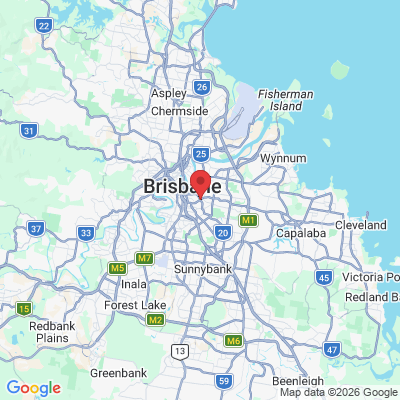
Custom Profile Roofing carries out ridge and barge capping repairs and replacement across South East Queensland. We service Brisbane, North Lakes, North Brisbane, and the full Sunshine Coast from Caloundra to Noosa.
Brisbane
North Lakes
Ashgrove
Chermside
Petrie
Caboolture
Morayfield
Carindale
Caboolture
Redcliffe
Toowoomba
Gatton
Maroochydore
Sunshine Coast
FAQ
Ridge and Barge Capping Repair FAQs
What is the difference between ridge capping and barge capping?
Ridge capping runs along the apex of a pitched roof where the two uppermost roof planes meet. Barge capping, also called gable flashing, runs along the rake edge of a gable end where the roof sheeting terminates at the fascia or barge board. Both are formed sheet metal components that prevent wind and water entry at those exposed junctions, but they cover different locations on the roof and fail for slightly different reasons.
Can loose ridge capping cause roof leaks?
Yes. Loose ridge capping that has partially lifted creates a gap at the apex of the roof, which is the point most exposed to wind-driven rain. Even a small gap at the ridge allows wind to push water under the capping and down into the roof cavity. Leaks from loose ridge capping often appear during storm events rather than in light rain, and the internal stain can be some distance from the ridge line itself as water tracks along the roof structure below.
Do you repair capping on Colorbond and other metal roofs?
Yes. We carry out ridge and barge capping repairs and replacement across all common metal roofing profiles used in Queensland including Colorbond, Zincalume, Trimdek, Klip-Lok, and corrugated iron. Where new capping is required, we use compatible materials to avoid galvanic corrosion at the junction between the capping and the sheeting below.
Should capping be resealed or fully replaced?
Resealing is appropriate when the capping metal is sound, correctly profiled, and the failure is isolated to a sealant bead at a join or termination. Full replacement is needed when the capping is corroded through, deformed, incorrectly installed originally, or when the same junction has been resealed before and is leaking again. We assess this during inspection and recommend accordingly. Applying sealant over capping that has a more fundamental problem gives a short-term result.
Can wind lift roof sheets if capping is loose?
Yes. Loose ridge or barge capping reduces the resistance of the roof edge to wind uplift at that junction. Where the fixings holding capping in place have backed out or corroded, the capping itself can lift in high winds, and where it has pulled away from the sheeting edge, the sheeting below it is more susceptible to uplift at the lap. Post-storm inspections often find capping failures that have contributed to or preceded sheet movement in the same area.
How long do ridge and barge capping repairs take?
Minor repairs involving re-fastening and resealing a short capping section can often be completed in a few hours. Replacing full capping lengths across multiple ridges or both gable ends of a larger roof, particularly where scaffolding is required, may take a full day. We provide a realistic timeline in the written quote once the inspection has confirmed the scope.
What happens if it rains before the job is finished?
For jobs spanning more than one day, all open junctions are secured in a weatherproof condition at the end of each working day. We plan schedules around forecast weather and communicate early if conditions require a change. We do not leave any open capping junction unprotected overnight.
Do you replace screws and fasteners when repairing capping?
Yes. Fixing replacement is a standard part of every capping repair. Where fixings have backed out, corroded, or are no longer holding the capping securely, they are replaced with new compatible corrosion-resistant screws appropriate for the substrate material and the exposure level of the property. Installing repaired capping with the original failed screws is not a lasting repair.
How do you prevent the same leak from coming back?
The most reliable prevention is addressing the underlying cause of the failure rather than resealing over it. Where the original installation was inadequate, replacement with correctly profiled and compatible capping installed with correct lap detailing is the lasting solution. Where the failure was at a sealant joint over a correctly detailed lap, resealing with appropriate material gives a durable result. We also check the adjacent area during every repair for related failure points that would otherwise generate a call-back.
When is re-roofing more cost-effective than repeated capping repairs?
When capping failures are part of a broader pattern of roof deterioration rather than isolated junction problems, continued repair investment delivers diminishing returns. If the sheeting alongside the capping is also corroding, if multiple different cappings and flashings are failing at the same time, or if the same junctions keep requiring attention, a re-roof that addresses the full system is the more cost-effective long-term decision. We assess this during inspection and give you an honest comparison of options if the situation warrants it.
book a free roof inspection
If your metal roof has lifted capping, a leak near the ridge or gable end, or visible corrosion or movement in the capping, the right first step is an on-roof inspection with photos. We will find the actual entry point, confirm the correct repair method, and provide a written quote before any work starts.
Talk to a Local Metal roofer Today
Whether you've got a leak that needs sorting this week or you're planning a full re-roof, we're ready to help. Get in touch with Custom Profile Roofing for a fast, written quote from a team that knows metal roofing inside out.
© Custom Profile Roofing, 2026 All rights Reserved.