Servicing South East Queensland
Insurance Metal Roof Repairs & Replacements
Servicing Brisbane, South East Queensland & Sunshine Coast
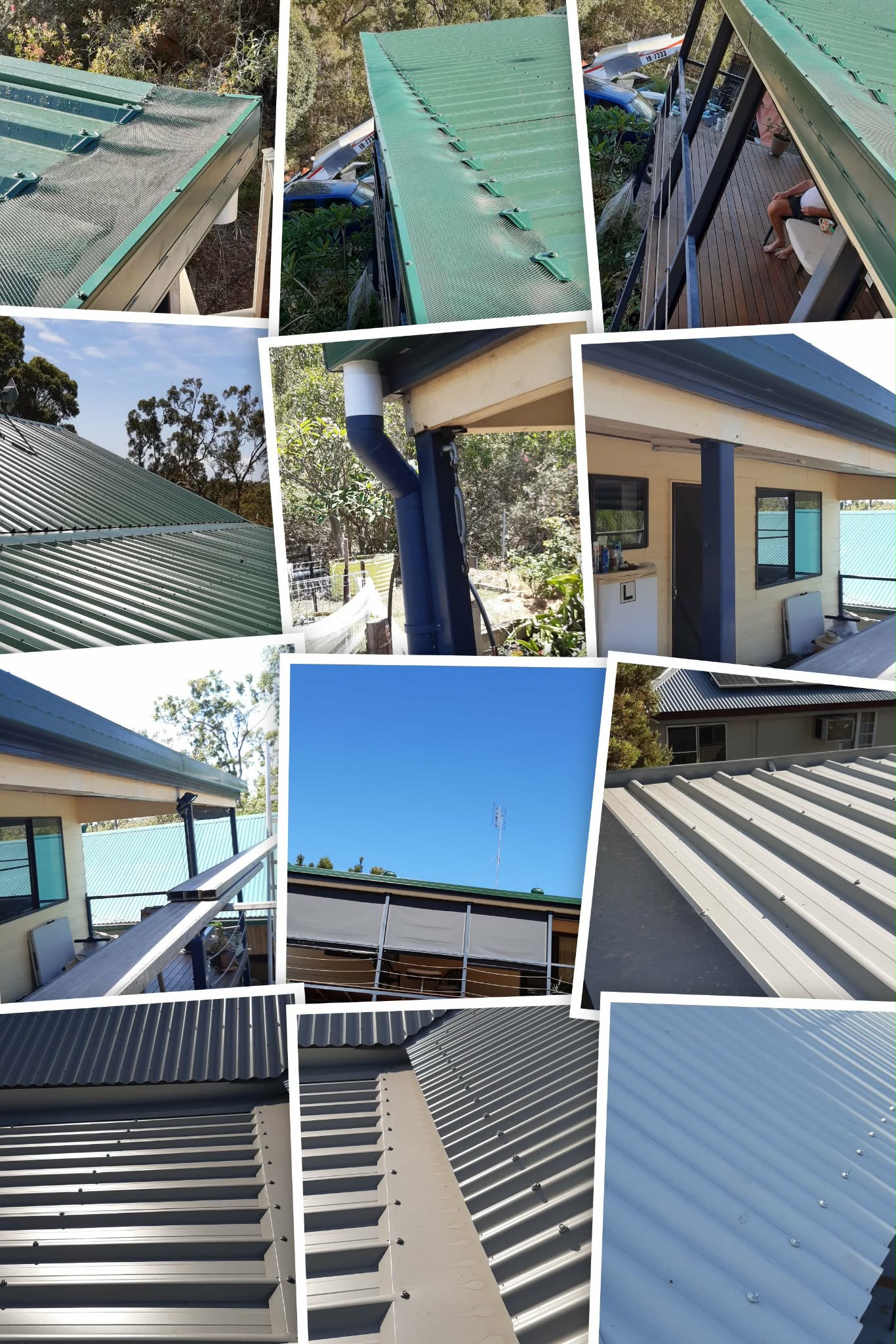
When storms or hail roll through South East Queensland, metal roofs bear the worst of it, and the damage isn't always obvious straight away. Leaks can take days to appear. Hail dents compromise laps and junctions without looking serious from the ground. Wind uplift can loosen fixings across an entire roof face without lifting a single sheet.
We specialise in metal roof repairs and replacements for insurance-related damage across SEQ. Beyond doing the physical work, we support you through the process with thorough on-site inspections, detailed damage photography, written findings, and clear quotes that give your insurer what they need to assess your claim.
Whether you need a single leak traced and fixed, flashings replaced, damaged sheets swapped out, or a full re-roof scoped and quoted, we approach every job methodically, because rushed or incomplete repairs on an insurance claim cause problems down the track.
Always speak with your insurer before authorising repairs. Approvals and requirements vary by policy.



Storm or hail damage? Here's what to do first
The steps you take in the first 24–48 hours after a storm event can make a real difference to how smoothly your claim progresses.
Stay safe first.
Don't attempt to access the roof during or immediately after a storm. If water is near switchboards, power points or light fittings, treat the situation as an electrical hazard and act accordingly.
Document everything as soon as it's safe.
Photos and video of damage (both inside and outside the building) are valuable evidence for your claim. Capture water stains, damaged ceilings, pooling water, and anything visible on the roof from ground level.
Contact your insurer promptly.
Most policies require you to notify your insurer within a reasonable timeframe after an event. Follow their guidance before authorising any building work, failing to do so can affect your claim outcome.
Ask about make-safe.
If your building is at risk of further damage, ask your insurer what immediate protective steps they'll approve and reimburse before you call anyone out.
repairs
How we support insurance-related roof repairs
One of the most common frustrations property owners face during an insurance claim is getting the right paperwork together. We take care of that side of things alongside the physical work.
Here's what we provide:
On-site inspection + Photography
A thorough assessment of the roof (where it's safe to access), including all visible damage, potential leak pathways, and areas of concern.
Damage photography
Detailed photos of affected areas, leak entry points, flashing conditions, and any structural concerns, from both roof level and internally where relevant
Written findings report
A clear summary of what's damaged, the likely cause, and the recommended scope of work; written in plain language that your insurer's assessor can work from.
Quote options
We provide repair, partial replacement, and full re-roof options where applicable, so you and your insurer have a complete picture.
Assessor liaison
Where required, we're available to walk through our findings with loss assessors or building managers on site.
insurance
Common insured events we see in SEQ
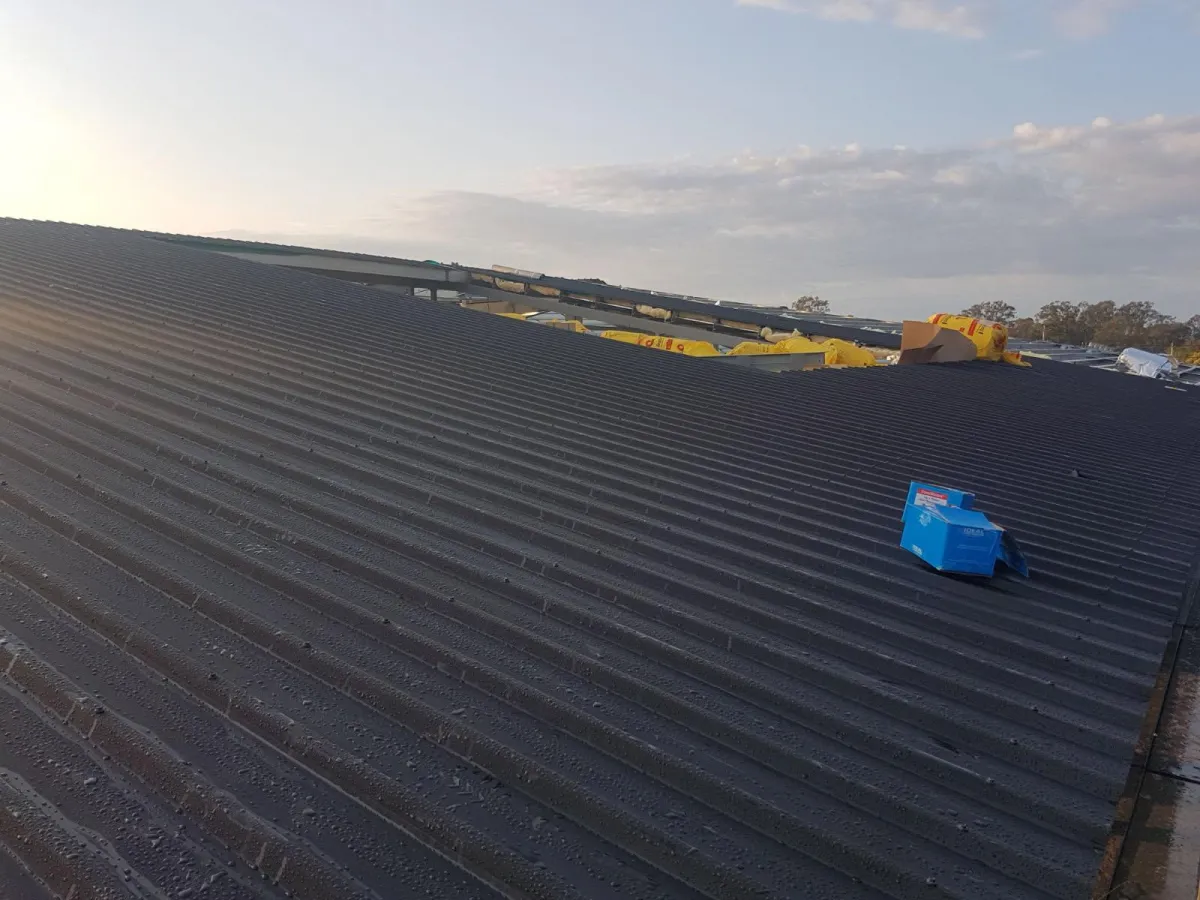
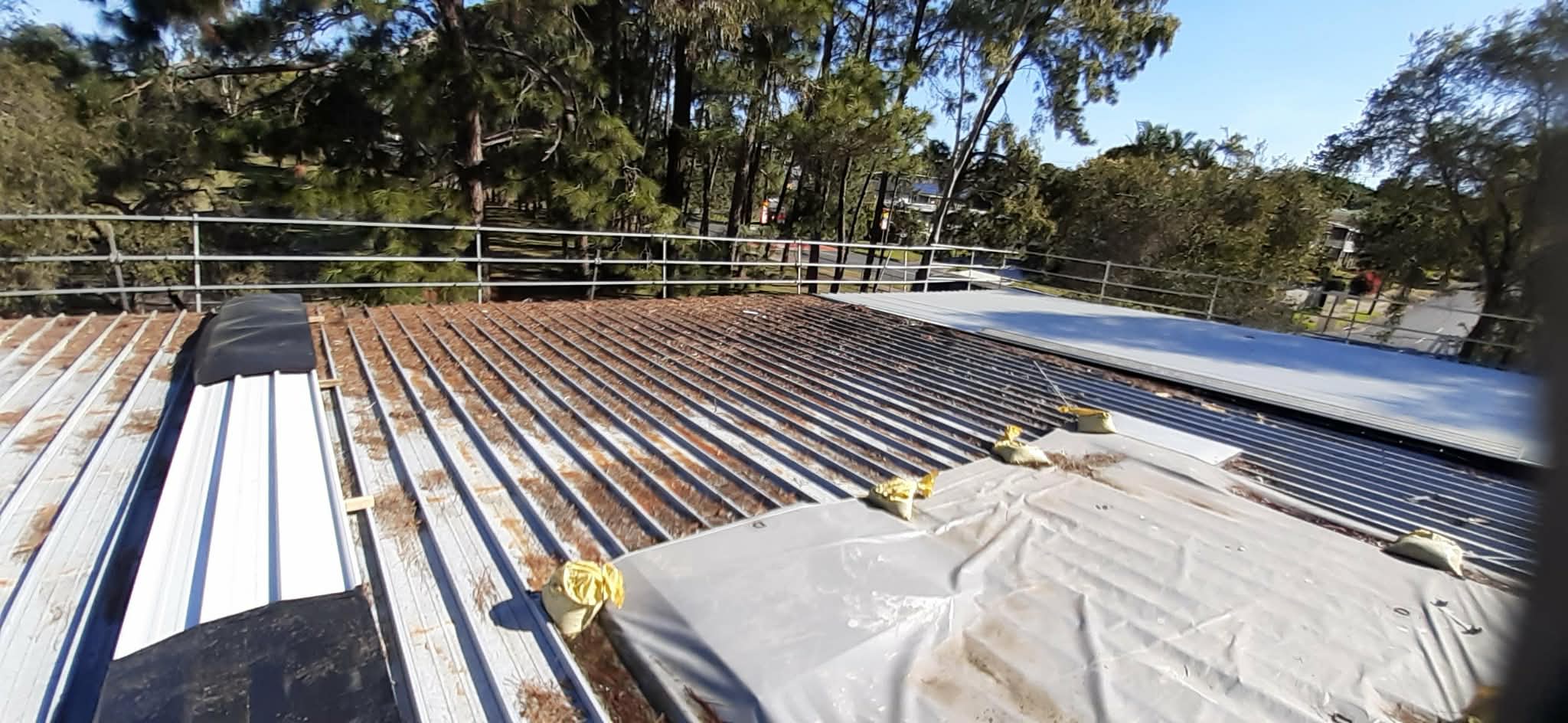
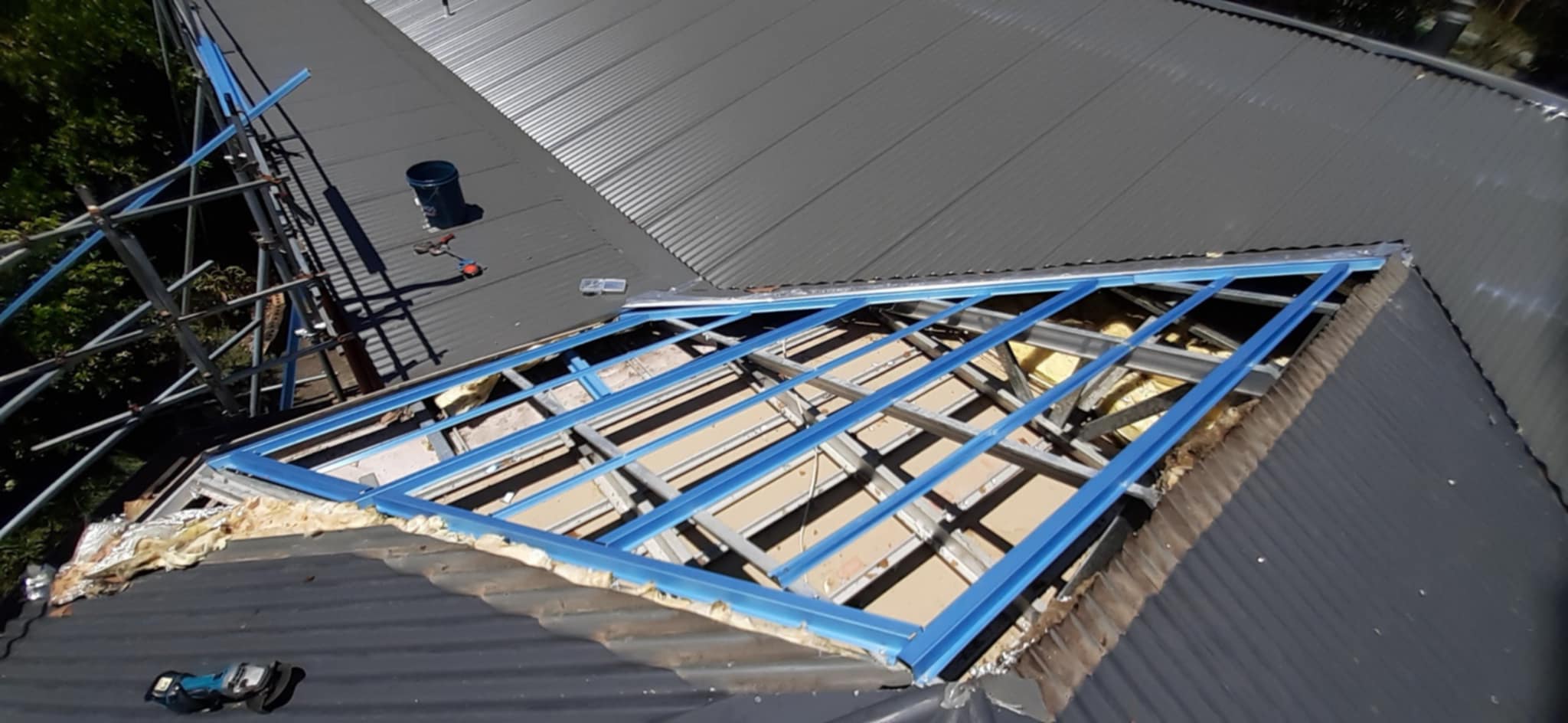
South East Queensland's climate produces a specific pattern of roof damage, particularly during storm season. These are the most common causes we're called out for:
Wind uplift
High winds can loosen screws, lift sheet edges, displace ridge and barge cappings, and shift flashings out of position. Damage can be widespread without any sheeting actually leaving the roof.Hail impact
Hail dents on metal sheeting are often dismissed as cosmetic, but they can compromise laps, junctions and sealed areas, creating new water pathways that only become apparent in the next heavy rain.Debris impact
Tree limbs, branches and airborne objects cause localised punctures, tears and crushed sections that need to be properly assessed before repair.Water ingress at penetrations and flashings
Storm conditions put pressure on every sealed joint and penetration on a roof. Skylights, vents, solar mounts, pipe flashings and wall junctions are all common failure points after significant weather events.Box gutter and valley overflow
During intense rainfall, gutters and valleys can be overwhelmed, forcing water back under sheeting or into the building through areas that normally drain without issue.
Book a free roof inspection
Call or submit a request online.
What we fix
Our metal roofing repair scope covers the full range of damage types typically associated with storm and hail events:
Leak repairs
We locate the actual entry point (which is often not directly above the internal stain), and repair it properly rather than applying surface sealant over the symptom.
Flashing repairs and replacement
Wall flashings, skylight flashings, vent and pipe flashings, solar penetration flashings, and any other sealed junction that's been compromised.
Ridge, barge capping repairs
Reseating, re-screwing, or replacing displaced or damaged cappings.
Screw replacement and re-fastening
Where wind or corrosion has caused fasteners to fail across the roof, we re-fasten methodically rather than spot-fixing.
Partial sheet replacement
Individual or multiple sheets that have been punctured, dented, or torn beyond repair.
Valley and box gutter repairs
Relining, resealing or replacing valley sections and box gutter systems where damage warrants it.
When replacement is the better pathway
A repair isn't always the right answer, and we'll tell you honestly when we think it isn't.
A full re-roof is often the more practical and cost-effective claim pathway when:
Roof replacement
Damage is spread across multiple sections of the roof, making targeted repairs inefficient or incomplete
The roof is approaching end of life and repeated storm-related leaks are compounding on an already aging system
An inspection reveals widespread fastener failure or corrosion that the storm event has exposed, rather than caused
The cumulative cost of repairs across several affected areas approaches or exceeds the cost of a full replacement
Where a re-roof is warranted, we'll scope it clearly and provide your insurer with the reasoning behind the recommendation. The distinction between storm damage and pre-existing wear is one your insurer will assess under your policy, we document what we find and leave coverage decisions where they belong.
Make-safe repairs
If your roof has sustained significant damage and water is actively entering the building, make-safe work, temporary measures designed to prevent further damage until full repairs can be arranged, may be appropriate.
Typical make-safe steps include tarping over damaged areas, temporarily sealing breach points, or securing loose sheeting that poses a falling risk. A few important things to keep in mind:
Make-Safe Repairs
Always confirm with your insurer before authorising any make-safe work. What's covered, and by whom, varies by policy, some insurers arrange this directly, others require you to organise it and submit receipts.
Keep a thorough record. Photos before, during and after any temporary protection is installed, along with all receipts, will support your claim and demonstrate that you acted reasonably to minimise further damage.
Make-safe is not a substitute for a proper repair. Temporary measures buy time, they need to be followed up with a full inspection and permanent repair as soon as your insurer gives the go-ahead.
Cost and claim considerations
Every roof is different, and so is every claim. Repair and replacement costs depend on a range of factors: the extent and type of damage, the pitch and accessibility of the roof, the material profile required, whether scaffolding or elevated access equipment is needed, and any safety requirements specific to the site.
What your insurer covers depends entirely on your policy, specifically how they assess the cause of damage (storm event versus wear, maintenance, or pre-existing defect). We don't make promises about coverage outcomes, and we'd encourage you to read your Product Disclosure Statement carefully and follow your insurer's instructions throughout the process.
What we can do is give you clear, honest documentation and straightforward pricing, so that when your insurer needs information, it's already there.
Our process
We keep the process straightforward from first contact through to job completion:
1. Initial enquiry
We gather basic details: roof type and profile, the date of the weather event, what symptoms you're seeing (leaks, visible damage, etc.), and your insurer's involvement to date
2. On-site inspection
We inspect the roof thoroughly where safe to access, photograph all damage, check internal areas for water ingress evidence, and document our findings in writing
3. Scope and quote
We provide clear written options: repair, partial replacement, or full re-roof, with pricing your insurer can work from
4. Works scheduling
Once you have the go-ahead from your insurer, we schedule the job and confirm materials and timeframes
5. Completion
Work is carried out to a proper standard, not just patched. We conduct a final quality check, clean up the site, and provide completion notes if required for your claim file
For post-disaster guidance, the QBCC provides useful resources for Queensland homeowners and property managers navigating repairs after storm events.
service Area
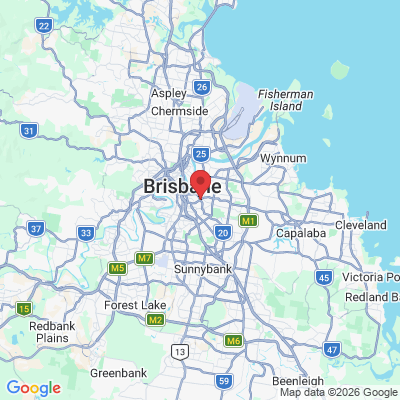
We service residential, commercial, and industrial properties across South East Queensland, including:
Brisbane
North Lakes
Ashgrove
Chermside
Petrie
Caboolture
Morayfield
Carindale
Caboolture
Redcliffe
Toowoomba
Gatton
Maroochydore
Sunshine Coast
FAQ
Metal Roof insurance repairs FAQs
Should I contact my insurer before arranging roof repairs?
Yes, always. Most policies require you to notify your insurer before authorising building work. Arranging repairs without approval can jeopardise your claim, even if the damage is clearly storm-related. When in doubt, call your insurer first.
What is a "make-safe" repair?
Make-safe work refers to immediate action taken to prevent further damage or make the site safe, for example, tarping a breached area or securing loose sheeting. It's a temporary measure, not a permanent fix. Always confirm with your insurer what they'll approve before you organise anything.
What documentation helps with an insurance roof claim?
Your own photos and video from immediately after the event are valuable. Beyond that, a professional inspection report with written findings, damage photos, and a detailed scope and quote gives your insurer's assessor what they need to make a decision. We provide all of this.
Can you repair just part of a metal roof, or do I need a full replacement?
Often a targeted repair is the right call, and the more cost-effective one. We'll assess the actual extent of damage and give you honest options, including when we think a full replacement would serve you better in the long run.
What if water is entering my home right now?
Call us. In the meantime, move valuables away from the affected area, place something to catch water if you can do so safely, document the situation with photos, and avoid any electrical hazards near water entry points. If you're concerned about safety, contact emergency services.
Can storm damage cause leaks far from the point of impact?
Yes, this is very common with metal roofing. Water travels along sheeting, battens, purlins and structural members before finding an internal entry point. The stain on your ceiling is often not directly below the source of the problem. Proper leak tracing is essential before any repair work begins.
How long do insurance-related roof repairs take?
Simple leak repairs and flashing work can often be completed within a day. Larger partial replacements or full re-roofs depend on the scope of work, material availability, access requirements, and weather. We'll give you a realistic timeframe once we've completed the inspection.
Do you work with commercial properties and body corporates?
Yes. We work across residential, commercial, and industrial properties throughout SEQ, and we're experienced in coordinating with building managers, strata managers, and loss assessors.
What affects repair and replacement costs the most?
The two biggest factors are usually the extent of the damage and the accessibility of the roof. Steep pitches, multi-storey buildings, and roofs requiring elevated access equipment add to the cost. Material profile availability can also affect pricing and lead times, particularly after widespread storm events when demand spikes across the region.
Can you provide a report suitable for my insurer?
Yes. Our written findings include a description of observed damage, likely cause, recommended scope of work, and a detailed quote. We can also provide this in a format suitable for submission to your insurer or loss assessor if needed.
Book Your Free Roof Inspection Today
If you have a roof concern or simply want to know the current condition of your metal roof, booking a free inspection is the most straightforward first step. We cover Brisbane, Ipswich, Springfield, Toowoomba, the Sunshine Coast, and all areas in between.
Talk to a Local Metal roofer Today
Whether you've got a leak that needs sorting this week or you're planning a full re-roof, we're ready to help. Get in touch with Custom Profile Roofing for a fast, written quote from a team that knows metal roofing inside out.
© Custom Profile Roofing, 2026 All rights Reserved.