Servicing South East Queensland

Valley and Box Gutter Repairs
Servicing Brisbane, South East Queensland & Sunshine Coast
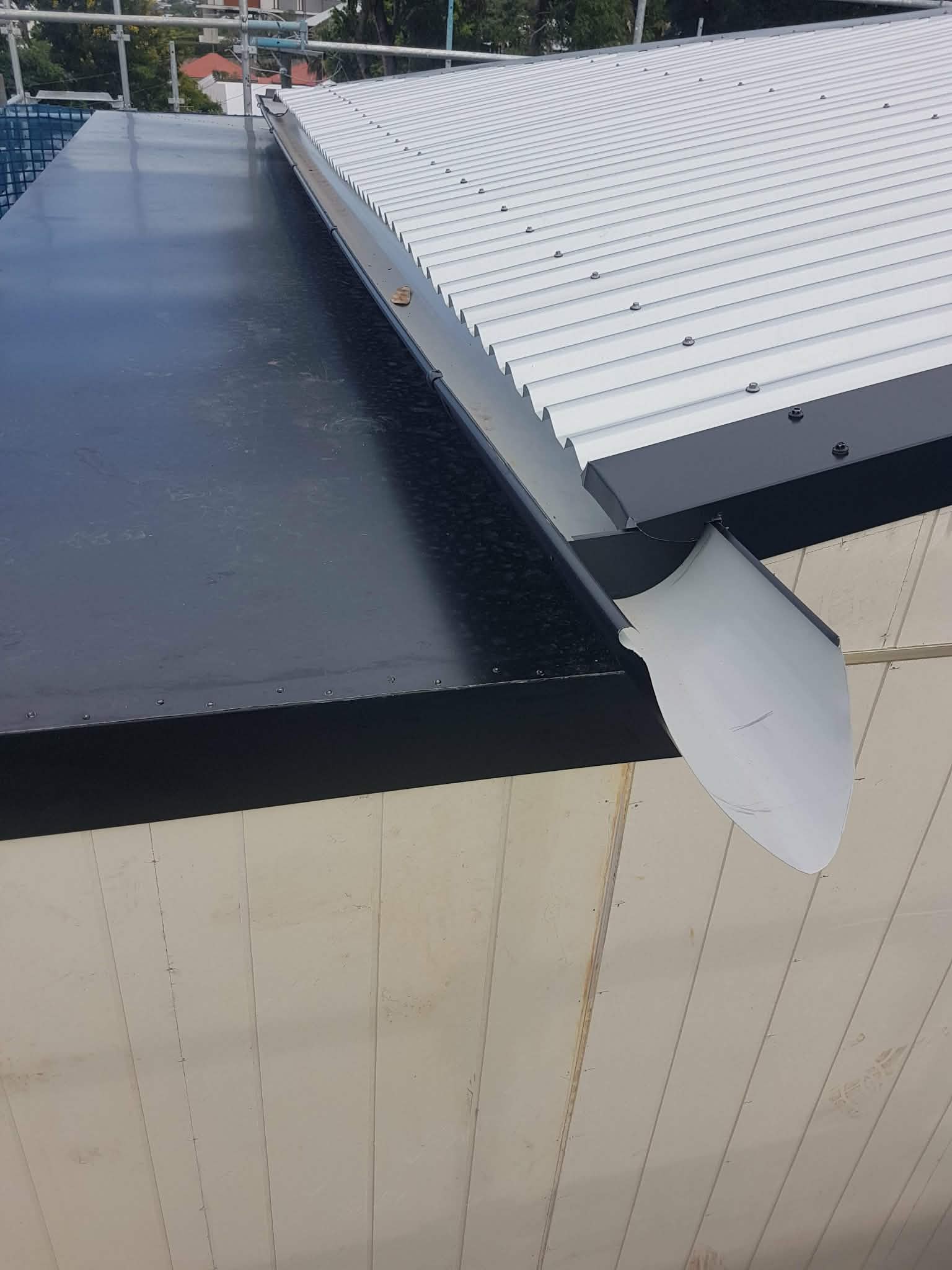
Identify the cause. Repair or replace the affected sections. Stop leaks and overflows before they damage the structure below.
Valleys and box gutters are the highest-volume water management components on a metal roof. Where two roof planes meet at a valley, or where internal box gutters carry runoff between roof sections or parapets, the volume of water concentrated in those channels during a Queensland storm event is significant. When a valley or box gutter fails through corrosion, blockage, overflow, or joint failure, the water that should be heading to a downpipe ends up in the building instead.
Custom Profile Roofing carries out valley and box gutter repairs and replacements on metal and Colorbond roofing systems across all common Queensland profiles.
What every job includes:
QBCC-licensed tradespeople on the tools throughout
On-roof inspection with photos to identify the actual failure point before any work begins
Written scope and quote covering the correct repair or replacement method
Compatible materials specified for the roof substrate and exposure level
Workmanship guarantee on completed repairs and replacements
Tidy site and clean handover




What Are Roof Valleys and Box Gutters and Why Do They Leak?
Roof Valleys
A valley is formed where two roof planes meet at an internal angle. The valley channel collects runoff from both roof planes above it and carries it down to the gutter line. Because a valley is effectively a concentrated drainage channel for two entire roof sections, the volume of water flowing through it during heavy rain is substantially higher than what flows off any individual sheet elsewhere on the roof.
This high water volume makes valleys one of the most critical elements in a metal roofing system. When a valley is corroded, when the join between the valley and the adjacent sheeting has failed, or when debris accumulation causes water to back up and overflow the valley edge, the water that should be flowing down to the gutter instead finds its way under the sheeting and into the roof cavity. As product guidance from LYSAGHT notes, if valley pans overfill in heavy rain, water can flow into the roof via side laps and flashings, which explains why valley-related leaks often appear specifically during intense downpours rather than light rain.
Box Gutters
A box gutter is an internal gutter, typically installed between two parallel roof sections, alongside a parapet wall, or within a building where the roofline configuration does not allow for a conventional external gutter at the eave. Unlike external gutters that overflow outward when blocked or overloaded, a box gutter that overflows or fails directs water into the building structure rather than away from it.
This makes box gutters one of the highest-consequence failure points on any property where they are installed. A blocked or corroded box gutter does not produce a visible overflow down an external wall. The water backs up, finds the path of least resistance through joins, flashings, or laps, and enters the building. The resulting ceiling or wall stain often appears in the middle of the building, well away from any external wall, which is why box gutter failures are so frequently misdiagnosed.
From a regulatory standpoint, the National Construction Code notes that box gutters are not covered by the Housing Provisions Deemed-to-Satisfy tables and must use AS/NZS 3500.3 as a Deemed-to-Satisfy solution or a Performance Solution. This reflects the higher consequence nature of box gutter design and installation compared to standard external gutters.
Repeated wetting and drying cycles from persistent box gutter or valley leaks also accelerate timber decay in the roof structure and ceiling framing below, which is why addressing these issues early is significantly more cost-effective than leaving them until structural damage has occurred.
book a free roof inspection
Call or book an inspection online.
why
Common Causes of Valley and Box Gutter Leaks
Valley and box gutter failures across Brisbane and the Sunshine Coast follow predictable patterns driven by Queensland's climate conditions and the nature of these high-volume drainage components:
Debris blockage and ponding
Leaves, bark, pine needles, and organic matter accumulate in valley and box gutter channels over time. Blocked outlets cause water to back up and overflow during storm events even when the gutter itself is in good condition. Ponding water between rain events accelerates corrosion in the affected sections.Corroded gutter and valley sections and pinholes
Queensland's UV intensity, heat cycling, and coastal salt air all accelerate corrosion in sheet metal drainage components. Once corrosion has progressed to pinholes or through-corrosion, resealing is not adequate and section replacement is needed.Failed joins, laps, and aged sealants
Where two gutter or valley sections join, or where the gutter meets an adjacent flashing or sheeting edge, the seal at that junction relies on correct lap detailing and secondary sealant. When sealant ages and cracks, or where the original lap was insufficient, the join becomes the failure point.Incorrect fall or drainage constraints
A box gutter or valley installed with insufficient fall drains too slowly for the catchment area it serves during storm events. Water that backs up in a low-fall gutter reaches joints, flashings, and laps at a depth they were not designed to resist. On coastal Sunshine Coast properties and in low-lying areas, this can be a contributing factor alongside other failure modes.Overflow paths not functioning or missing
Box gutters should have overflow provisions that direct water outward and away from the building in the event of a blockage or extreme rainfall. Where overflow paths are absent or blocked, the failure mode is water entry into the building rather than controlled overflow at the roof edge.
roof valley & gutters repair. What Is Included
Roof Valley Repair
Valley repairs and replacement on metal roofs involve the following scope depending on the condition of the valley and the nature of the failure:
Clear debris from the valley channel and assess the full extent of corrosion, pinholes, and join failures before any repair scope is confirmed. The condition of the valley base and the adjacent sheet laps must be assessed together, as failures in both areas often occur simultaneously.
Repair and reseal valley joins and laps where the metal is still sound and the failure is at a sealant bead or minor lap gap. Resealing is appropriate when the valley metal has good structural integrity and the failure is isolated to the secondary seal at a specific join.
Replace corroded or rusted-through valley sections with new material compatible with the adjacent roofing system. Where corrosion has progressed to through-holes or widespread pitting, reseal is not adequate and section replacement is the correct repair.
Check and address the interface between the valley edge and the adjacent sheeting laps. Water that overflows a valley edge enters under the sheet lap adjacent to the valley. Where lap sealant has failed or where the lap overlap is insufficient, this is addressed as part of the valley repair scope.
Final water path check across the full valley length and at the outlet to confirm drainage is clear and the repaired sections are watertight.
Box Gutter Repairs
Box gutter repair work requires a more systematic approach than valley or external gutter repairs because of the internal nature of the drainage system and the consequences of a failure. Our box gutter repair scope covers:
On-roof inspection with photos to identify the actual entry point, the location and extent of any corrosion or joint failure, the current fall and drainage behaviour, and any ponding or overflow evidence. Box gutter leaks are frequently misdiagnosed from inside the building because the water travels before it drips down. The inspection works from the gutter down to find where the water is actually getting in.
Clear blockages from the gutter channel, strainer boxes, and downpipe heads. Debris removal is carried out before any repair scope is confirmed, because blockage alone can cause apparent leaks that are actually overflow events rather than corrosion failures.
Assess fall and ponding areas. Where standing water after rain indicates insufficient fall, we identify the contributing factors and advise on what can practically be addressed within a repair scope.
Repair and reseal joins and transitions where the gutter metal is sound and the failure is at a specific sealant or lap point. Resealing is appropriate when the gutter base and sides have structural integrity and the failure is genuinely isolated.
Replace corroded sections where the metal has deteriorated past the point where resealing provides a lasting result. Box gutter replacement uses compatible materials and is installed with correct fall, lap, and transition detailing.
Confirm overflow strategy. Where overflow provisions are absent or compromised, we advise on what is needed. The NCC requires that box gutters comply with AS/NZS 3500.3 as a Deemed-to-Satisfy option or a Performance Solution. We do not certify designs, but we can flag where a system does not appear to have adequate overflow capacity so you can take the appropriate next step with the relevant professional.
Book a free roof inspection
Call or submit an inspection request online.
service Area
Custom Profile Roofing carries out valley and box gutter repairs and replacement across South East Queensland. We service Brisbane, North Lakes, North Brisbane, and the full Sunshine Coast from Caloundra to Noosa.
Brisbane
North Lakes
Ashgrove
Chermside
Petrie
Caboolture
Morayfield
Carindale
Caboolture
Redcliffe
Toowoomba
Gatton
Maroochydore
Sunshine Coast

FAQ
Valley and Box Gutter Repair FAQs
What is the difference between a valley and a box gutter?
A valley is a channel formed where two roof planes meet at an internal angle, collecting runoff from both planes and directing it to the gutter line at the eave. A box gutter is an internal gutter, typically installed between two parallel roof sections or alongside a parapet wall, that carries water through the building envelope to a downpipe rather than discharging at the eave. Both concentrate high water volumes and both are high-consequence failure points when they leak or overflow.
Why do box gutters leak into the ceiling rather than showing up at a wall?
Because box gutters are internal, when they fail the water enters the building structure rather than running down an external wall. Water from a failed box gutter travels through the roof structure and along the ceiling framing before it drips down, which is why the stain or drip appears in the middle of the building well away from any external wall. This pattern, a leak in the interior of a building rather than near a perimeter wall, is the most reliable indicator that a box gutter rather than a roof sheet or flashing is the source.
Can valley or box gutter leaks show up far from the actual entry point?
Yes. Water from both valleys and box gutters travels along roof structure elements before dripping down. In a valley failure, water enters under the sheet lap adjacent to the valley and can track across the underside of the sheeting or along battens before appearing inside. Box gutter water travels along ceiling framing before dripping at the lowest point it reaches. The stain inside is rarely directly below the entry point, which is why systematic inspection from the roof is the only reliable way to find the actual source.
Can you repair just one section, or does the whole gutter need replacing?
Partial repair or replacement is usually possible and appropriate where the failure is isolated to a specific section, join, or area of corrosion. We assess the full length of the valley or box gutter during inspection and confirm what is genuinely needed rather than defaulting to full replacement. Where the corrosion is widespread across most of the gutter length, replacement is the more cost-effective long-term option. We will give you an honest comparison.
Do you clear debris and check downpipe discharge during repairs?
Yes. Debris clearing is carried out before any repair scope is finalised because blockage alone can cause overflow events that appear to be structural failures. Strainer boxes and downpipe heads are checked as part of the inspection. Where debris has been a contributing factor to the failure, we advise on what ongoing maintenance would reduce the risk of recurrence.
What causes leaks only during heavy storms but not in light rain?
The most common causes of storm-only leaks in valleys and box gutters are overflow events and wind-driven water entry at laps. During heavy rain, a valley or box gutter that is partially blocked, undersized, or has insufficient fall can overflow its edges at the volume of water it is receiving, even if it drains adequately in lighter conditions. Wind-driven rain can also push water over valley edges and under laps at angles that standard rain does not. Both scenarios mean the failure point is only triggered under high-volume or high-pressure conditions.
How long do valley or box gutter repairs take?
Minor repairs involving clearing debris and resealing isolated joins can often be completed in a few hours. Replacing a section of corroded box gutter or valley material, particularly where associated sheet or flashing work is also needed, may take a full day or require a follow-up visit where materials need to be ordered. We provide a realistic timeline in the written quote once the inspection has confirmed the full scope.
What happens if it rains before the job is finished?
For jobs spanning more than one day, all open sections and exposed junctions are secured in a weatherproof condition at the end of each working day. We plan schedules around forecast weather where possible and communicate early if conditions require a change. We do not leave any open gutter or valley section unprotected overnight.
Do you work on Colorbond and other metal roof types?
Yes. We carry out valley and box gutter repairs and replacement on all common metal roofing systems used in Queensland including Colorbond, Zincalume, Trimdek, Klip-Lok, and corrugated iron. The materials used for new valley and box gutter sections are compatible with the adjacent roofing system to avoid galvanic corrosion at the interface.
When is re-roofing more cost-effective than repeated valley and box gutter repairs?
When valley or box gutter failures are occurring alongside widespread sheet corrosion, multiple flashing failures, or structural deterioration in the roof system generally, continued targeted repair investment delivers diminishing returns. If the same valleys or gutters have been repaired before and the failures are recurring, or if the repair scope across the roof is approaching re-roofing cost, a full system replacement is the more cost-effective long-term decision. We assess this during inspection and give you a comparison of both options if the situation warrants it.
book a free roof inspection
If you have a roof leak that appears in the middle of your building, water overflowing from a gutter during storms, or visible rust in a valley or box gutter, the right first step is an on-roof inspection with photos. We will trace the water path to its actual source, confirm the correct repair or replacement method, and provide a written quote before any work starts.
Talk to a Local Metal roofer Today
Whether you've got a leak that needs sorting this week or you're planning a full re-roof, we're ready to help. Get in touch with Custom Profile Roofing for a fast, written quote from a team that knows metal roofing inside out.
© Custom Profile Roofing, 2026 All rights Reserved.